
Private gym access
Available now
24/7 smartphone access, InBody scans and dry-heat sauna access. A place to build a routine before work, after work or between shifts.
Corporate wellness · Rochester, Minnesota
A personal place to get stronger.
An employee benefit built around your team.
Start with five participating employees. Bring together private gym access, individual coaching and healthy routines—with John and Kelly in your corner.
Locally owned. Personally planned. Availability confirmed with Ace.
Our maximum is 500 individual members total, shared across single, couples, family and corporate memberships. Each person counts once. A company account adds no extra capacity, and an existing member adding training does not count twice.
The private-gym difference
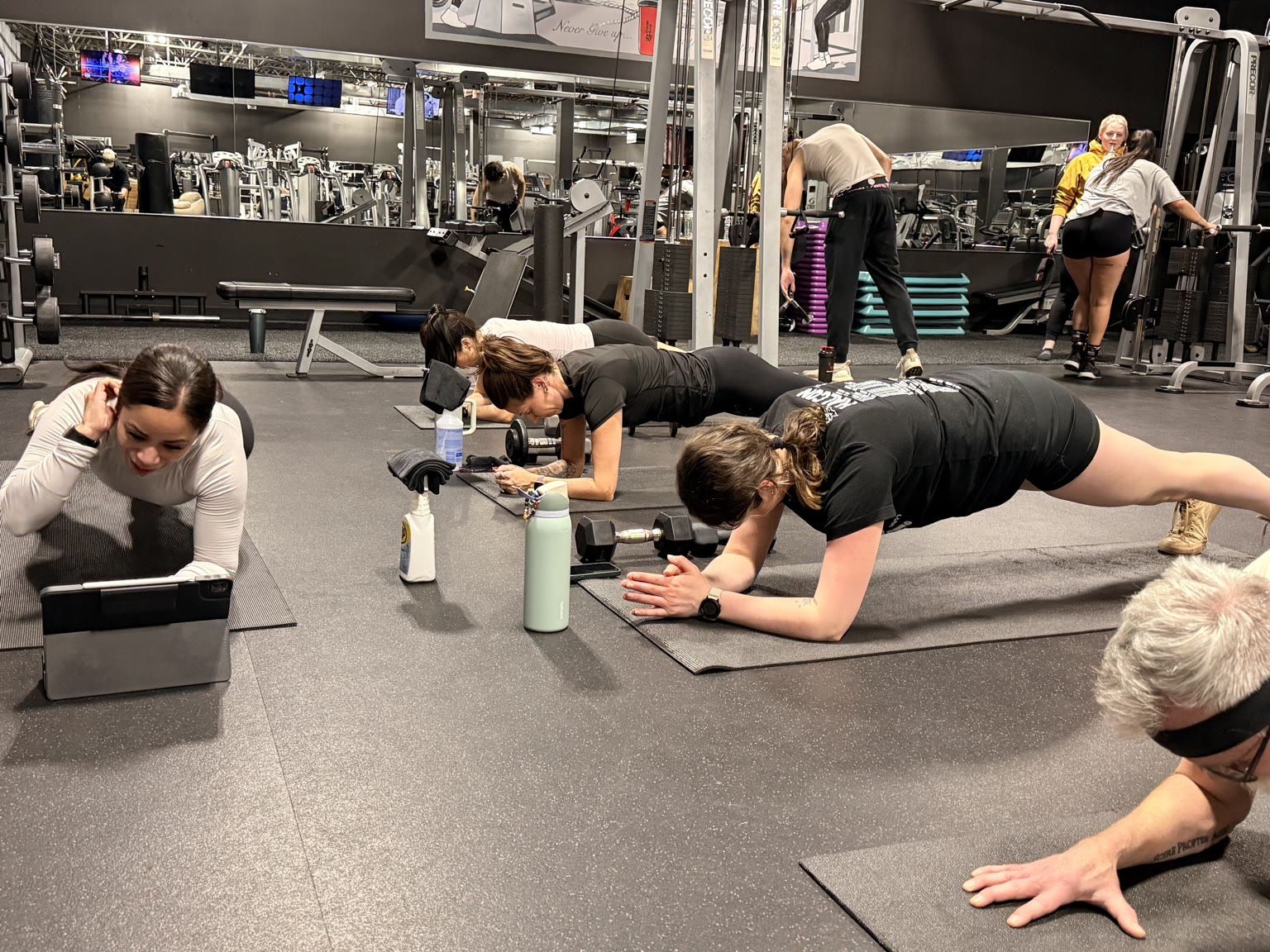
Give your employees a place where they can ask questions, find their confidence and keep showing up. Ace’s 9,000-square-foot facility combines independent 24/7 access with coaching when it’s wanted.
Private membership means intentionally limited enrollment. Members share the gym; a corporate plan does not reserve the entire facility.
Come see Ace for yourselfChoose what your people will use
Start with access. Add the right amount of support. Every proposal defines the services, quantities, schedule and contribution split.
Available now
24/7 smartphone access, InBody scans and dry-heat sauna access. A place to build a routine before work, after work or between shifts.
Available by appointment
Optional employer-sponsored coaching with defined session lengths and quantities. Each employee works with a coach on their own starting point and goals.
Custom proposal
Discuss small company classes and programs around your team’s schedule. Ace confirms coach availability, group size and frequency before you commit.
Scope agreed with Ace
Practical education on food choices and sustainable routines. Choose the format and frequency with Ace; individualized support is quoted separately.
Negotiated option
Discuss eligible products and a member offer that fits the partnership. Discounts, inventory and exclusions are confirmed in your proposal.
Arranged with John
Employer-funded, employee-paid or shared contributions. Your written plan shows each party’s amount and when it is due.
Clear from the first conversation
The employer can pay the full agreed amount, a percentage, or an agreed allowance. Employees pay the remaining amount. Training and private classes appear separately so everyone knows what is included.
Ace confirms the payer setup and collection dates with you before enrollment. Automatic payroll deductions and a self-service corporate split-billing portal are not currently offered through this page.
The research behind the investment
Published studies have linked wellness programs and regular physical activity with lower healthcare spending. Here’s what three studies found.
Seven-year evaluation period · BLS CPI-U adjustment
A comparison with similar large companies estimated lower medical spending under Johnson & Johnson’s comprehensive wellness program.
Observational employer comparison. The program included more than gym access; this figure does not isolate exercise’s effect.
Henke et al. · Health AffairsAn observational study of 21,750 adults linked activity across adulthood with healthcare costs after Medicare eligibility.
Association, not proof of cause. Later-life Medicare costs are different from an employer’s current insurance premiums.
Coughlan et al. · BMJ Open Sport & Exercise MedicineResearchers compared 4,766 health-club benefit participants with 9,035 matched nonparticipants in a Medicare Advantage plan.
Observational study of adults 65+. Participants chose to use the benefit, so selection differences may contribute.
Nguyen et al. · Preventing Chronic DiseaseThese findings support the potential for lower costs. Results vary across studies, and some randomized workplace trials found no spending reduction. These are published study estimates—not Ace results or a savings guarantee.
Workplace study: Published in 2011, covering 2002–2008. Johnson & Johnson funded the evaluation. The dollar amount is a medical-spending estimate, not net profit after program costs.
Inflation adjustment: $565 × (336.940 ÷ 214.537) = $887.36, rounded to approximately $887. Uses the BLS all-items CPI-U, U.S. city average, not seasonally adjusted: 2009 annual average, 214.537 , and September 2026, 336.940 , the latest published month as of October 24, 2026. This restates purchasing power using general inflation; it is not a new study result, a medical-price adjustment, or a projection of Ace savings.
Activity study: Medicare claims from 1999–2008 were linked to recalled activity histories. The 15.9% estimate’s 95% confidence interval was 8.1%–23.6% lower. The chart converts the reported difference to an index: 100 − 15.9 = 84.1; it does not show dollar amounts.
Health-club study: Data from 1998–2003. The adjusted year-two difference accounted for baseline costs and measured health differences; its 95% confidence interval was $106–$892 lower. It is not a $500 drop from participants’ own first-year costs.
The wider evidence: A 2019 randomized workplace trial found improvements in reported exercise and weight-management behaviors, with no significant healthcare spending difference after 18 months. Different populations, programs and study designs can produce different findings.
Ace’s role is to make access, coaching and consistent participation easier. Company plans do not include a promised healthcare-cost reduction.
Beyond healthcare costs
Productivity, physical work ability, mental wellbeing and long-term health are different outcomes. These studies help explain why investing in people can matter across all four.
Researchers tracked objective health and production data from a corporate wellness program. Workers whose health improved increased productivity by about 10%; surveys pointed to better diet and exercise.
This result applies to the workers whose health improved, not everyone enrolled. The small, non-randomized study evaluated a broader wellness program; it could not isolate the effect of fitness training or establish a revenue increase.
Gubler, Larkin & Pierce · Management ScienceEmployee progress, in perspective
Two studies, two views of employee wellbeing: how work ability changed with training, and how regular exercise related to wages.
Randomized trial · 10 weeks
Supervised strength training at work helped preserve employees’ ability to meet job demands.
200 female hospital workers. Small effect, mainly reflecting maintained work ability versus a decline in the home group. Both groups exercised; this is not a training-versus-no-training comparison. The score is self-reported, not output or extra hours worked.
Jakobsen et al. · BMC Public Health, 2015Wage association · 2012
A U.S. labor-market study linked regular exercise with higher wages across several statistical methods.
Kosteas analyzed National Longitudinal Survey of Youth data using methods including propensity-score matching. Exercise was not randomly assigned. These estimates do not establish that joining Ace will raise someone’s pay; job, education and other differences may matter. This graph does not project future pay or employer revenue.
Kosteas · Journal of Labor Research, 2012A 10-week randomized trial of 200 female hospital workers compared supervised workplace strength training plus coaching with home exercise. The workplace group’s Work Ability Index was 1.1 points higher at follow-up, mainly because it maintained ability while the home group declined.
A companion analysis of the same trial found 0.5 points less perceived physical effort during work on a 0–10 scale for the workplace group versus home exercise.
Both outcomes were self-reported. The work-ability effect was small (95% confidence interval: 0.3–1.8 points); the exertion difference’s 95% confidence interval was −0.8 to −0.2 points. Additional hours or workload completed were not measured.
Jakobsen et al. · Work ability, 2015 Companion physical-exertion study, 2015A 2023 overview of 97 reviews covering 1,039 randomized trials found that physical activity improved symptoms of depression, anxiety and psychological distress compared with usual care across varied adult populations.
Most included reviews were rated critically low quality, which limits confidence in the estimates. These were mental-health outcomes; the review did not measure employee output or revenue.
Singh et al. · British Journal of Sports Medicine, 2023A prospective study of 479,856 U.S. adults found that meeting both aerobic and strength-activity guidelines was associated with a 40% lower relative hazard of death during follow-up than meeting neither guideline.
Observational association (hazard ratio 0.60; 95% confidence interval: 0.57–0.62). It does not mean 40% longer life. Employee retention and years with an employer were not measured.
Zhao et al. · The BMJ, 2020
Good neighbors. Stronger connections.
Your company can support its people and take part in Ace’s Rochester community. We can discuss an optional partner listing, relevant business introductions and an introductory or ongoing member offer that works within your margins.
Listings and offers are optional and confirmed individually. A dedicated partner directory and automated referral matching are proposed additions. No customer volume is promised; member contact information is not shared without permission.
A personal conversation. A clear plan.
Apply with your company and contact details, then choose the employee-account range you’re considering.
See the price per employee, payer split, due dates and exact training or class quantities.
Ace verifies available membership capacity, confirms agreements and helps employees get started.
Start with five people
Tell John what a useful employee benefit would look like for your company. We’ll work through the options together.
Already have Ace members on your team? Tell us during setup so we can review their existing memberships and avoid duplicate enrollment.
612-207-7656 · Reach John directly.
Employer-sponsored access may have payroll and tax implications. Have your tax adviser confirm deductibility and employee tax treatment for your arrangement. Ace does not promise a tax-free benefit or an unconditional write-off.
IRS · Employer’s Tax Guide to Fringe Benefits